

Corner Block Subdivision and Second Dwellings:
What Could Your Corner Block Mean?
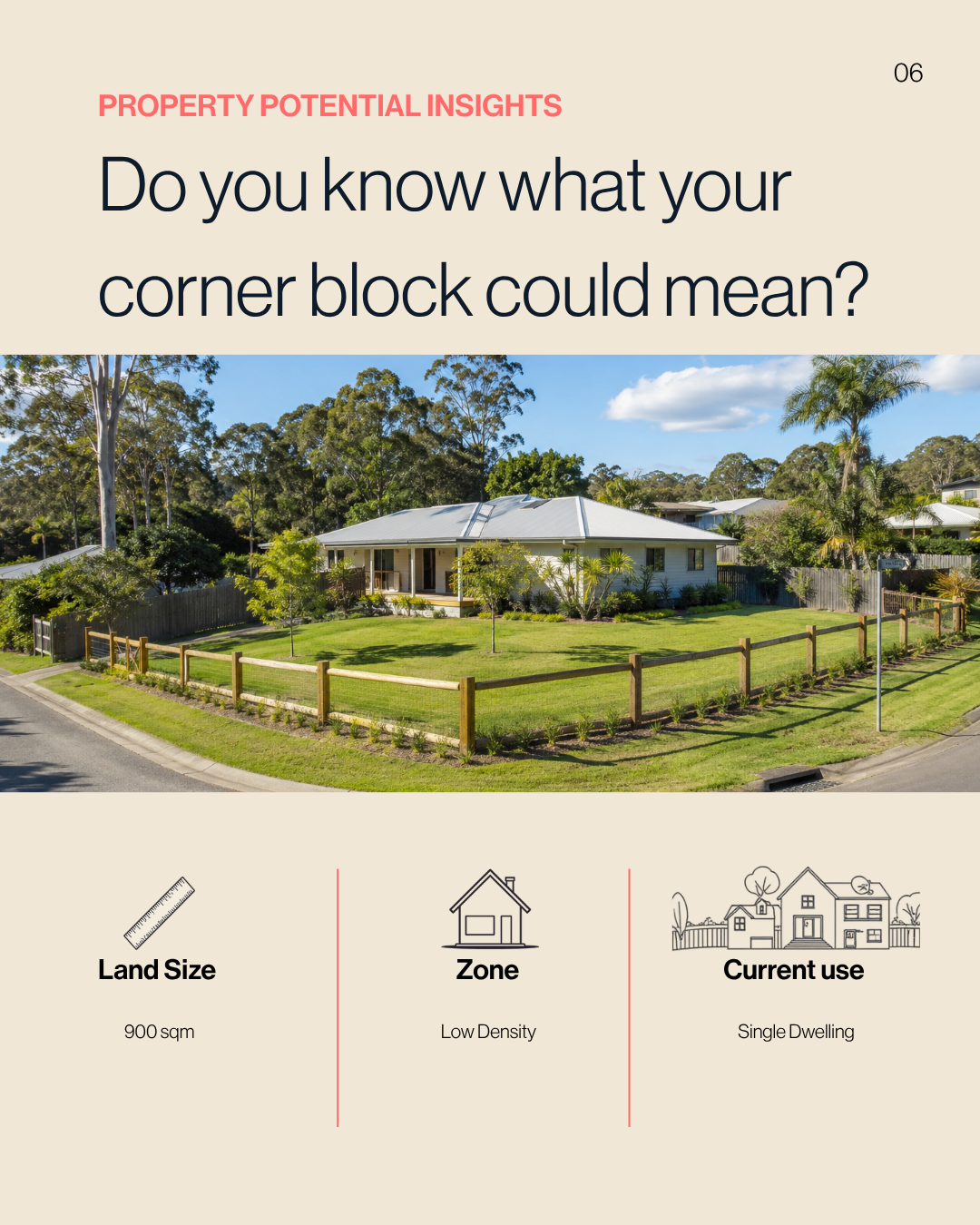
If you own a corner block, you may have wondered whether that second street frontage could make a difference to your property's potential.
It's a fair thing to wonder. Corner blocks often look different from their neighbours, and many owners sense there might be more to them than meets the eye.
What a corner block does and doesn't mean
A corner position doesn't necessarily mean you can subdivide. And it certainly doesn't mean you should.
What it does mean is that a corner block can change the way a property needs to be considered. Having two street frontages can affect access, layout and the way planning rules apply, which is why corner blocks are often treated differently from standard lots.
It's a reason to look more closely, not a reason to assume.
What can influence what's possible
Several factors work together on a corner block. Understanding them is the first step in working out whether corner block subdivision, a second dwelling or another option might be worth exploring.
The location of the existing home
Where the house sits on the block matters a great deal. A home positioned toward one end can leave usable space elsewhere, while a home placed centrally can limit what else could fit, even on a generous block.
How the property is accessed
Which street the driveway uses, and whether access could work from the other frontage, can influence what's realistic. Access rules apply differently depending on the road, and corner sites often have their own considerations.
The amount of usable land
Total land area and usable land aren't the same thing. Slope, easements, trees, services and the shape of the block can all reduce the space that's practical to use.
The street frontages
Each frontage brings its own requirements. The width and layout of both street frontages can shape which options are worth exploring, and why two corner blocks of similar size can end up with quite different outcomes.
The characteristics of the site
Zoning, overlays such as flood and bushfire, and the wider planning scheme all sit behind the scenes. On the Sunshine Coast, the planning scheme and the property's zone set the framework, and overlays can add further detail on top of that.
Why owners look at their corner block
There isn't one reason. For some owners, the question is about a future second dwelling, sometimes called a secondary dwelling, granny flat or dual living arrangement. For others, it's about:
Creating options for family
Planning for changing circumstances
Understanding the property's potential before eventually deciding whether to sell
If you're thinking about selling
If selling is on your mind, understanding what your property could potentially offer is worth considering before you make that decision.
That doesn't mean you should hold on or develop it. It simply means you'd be deciding with the full picture in front of you, rather than working from assumptions or only what's visible from the street.
Your property may have more to consider than meets the eye
From the street, a corner block can look like any other property. But its position, layout and planning context can add considerations that aren't obvious at first glance. Some of those may open up options. Others may narrow them. Either way, it helps to know.
Take the first step
At Property Potential Co, we combine town planning knowledge with real estate insight to help you understand your property's options clearly. There's no pressure and no obligation.
If you own a corner block and have been wondering whether its position could make a difference, send Property Potential Co a message or complete the Free Property Potential Check.
Understanding your property's potential doesn't tell you what to do. It helps you decide what to do.
This article is general information only and isn't a guarantee of any planning, approval or financial outcome. Every property is different, and any subdivision or additional dwelling is subject to Council requirements and approvals.