

Can I Build a Second Dwelling on My Property?
More to Consider Than Land Size
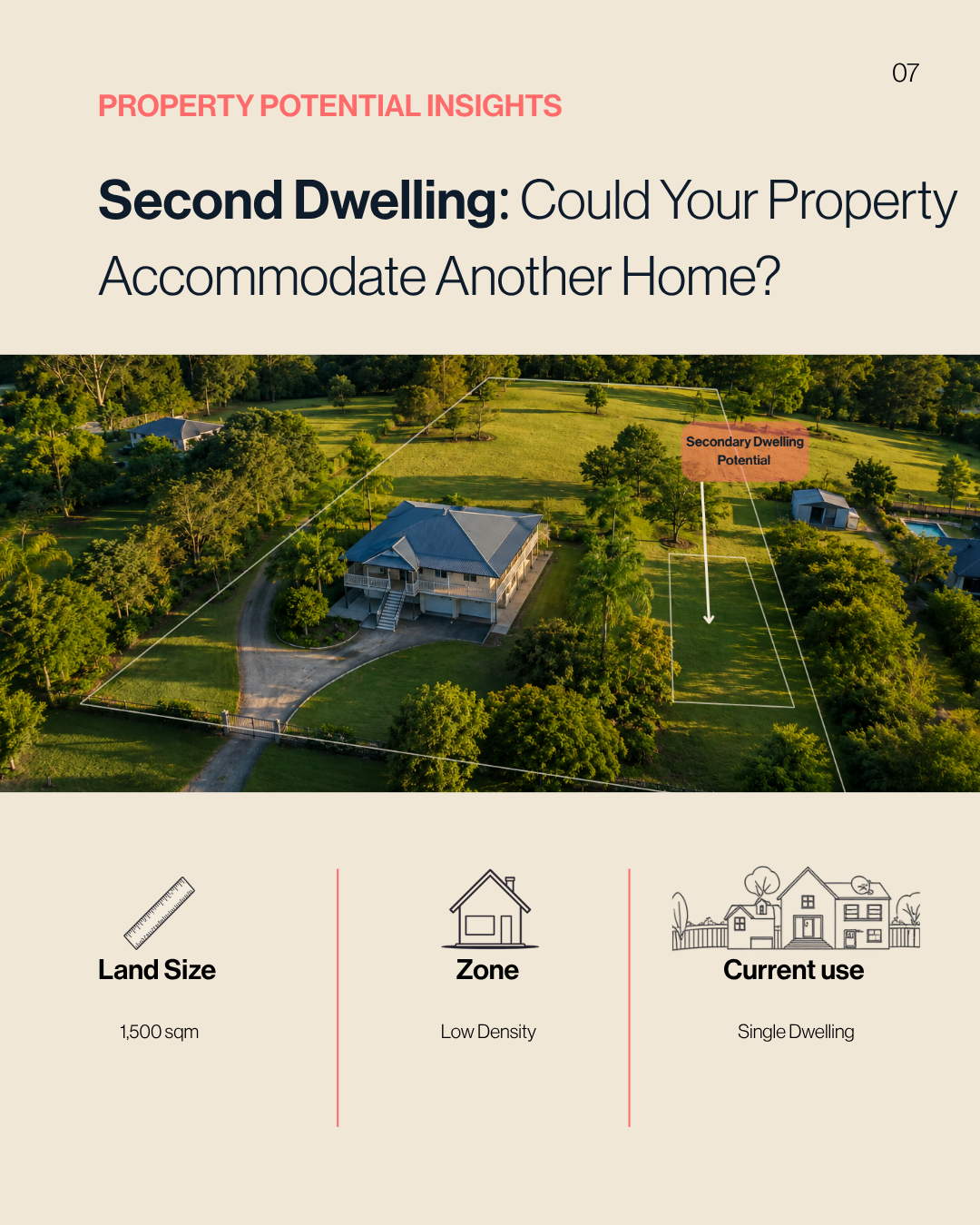
Could your property accommodate a second dwelling, or is there more to consider than simply having enough land?
For many long-term owners, a second dwelling isn't a building project. It's an option they may want to keep open for later in life.
Why owners consider a second dwelling
The reasons are usually personal, and they often change over time. A second dwelling, sometimes called a secondary dwelling, a granny flat or dual living, might be considered for:
Having parents or family closer by
Creating space for children
Preparing for multigenerational living
Downsizing while keeping the family property
Creating another income opportunity
Simply keeping more options open for the future
Whatever the reason, the underlying question is usually the same: could I build another house on my property?
A large block doesn't automatically mean you can add another home
It's easy to look at open space and assume there's plenty of room. But having a big block doesn't automatically mean a second dwelling is possible.
Several things can influence what may be possible:
Zoning. Your zone sets the broad framework for how your land can be used, and different zones treat additional dwellings differently.
Overlays. Flood, bushfire, vegetation and slope overlays can affect where a dwelling could sensibly sit, and how it might need to be designed.
Site characteristics. The shape of the land, its slope, the position of trees and watercourses, and how the block is accessed all matter.
Existing development. What's already on the property, including the house, sheds, driveways and services, can shape what else could fit.
The applicable planning provisions. Planning schemes, such as the Sunshine Coast Planning Scheme, set out the specific requirements and terms that apply to additional dwellings. A secondary dwelling and dual occupancy may sound alike in conversation, but they aren't always treated the same in planning terms.
Why two similar properties can have very different options
This is the part that surprises many owners. Two properties can look almost identical, with the same size, the same street and a similar house, yet have quite different options once the details are considered.
One may have straightforward access and few constraints. The other may be affected by an overlay, an awkward layout or a planning provision that limits what's possible. From the road, you'd never know the difference.
That's why general rules of thumb, and even what your neighbour was able to do, can be unreliable guides to your own property.
Is it time to look again?
If you've owned your property for many years, it may be worth asking yourself:
"Has my property changed, or have my circumstances changed, enough that I should look at my options again?"
Families grow and change. Parents age. Children become adults. Plans about staying, downsizing or ageing in place shift over the years. Planning rules and mapping can change too. What you assumed about your property ten or twenty years ago may not be the full picture today.
You don't need to be ready to build or sell
Looking at your options doesn't mean you've committed to anything. You don't need to be ready to build, sell or start a project.
Sometimes the first step is simply understanding what your property could mean for your future. That understanding can make family conversations easier, and it can help you make decisions calmly rather than under pressure.
Take the first step
At Property Potential Co, we combine town planning knowledge with real estate insight to help you see your property's options clearly. There's no pressure and no obligation.
If you'd like to explore your property's potential, complete the FREE Property Potential Check. It's a simple first look from a qualified Town Planner and licensed Real Estate Agent.
This article is general information only and isn't a guarantee of any planning, approval or financial outcome. Every property is different, and any additional dwelling is subject to Council requirements and approvals.