

Rural vs Rural Residential Zoning:
What Acreage Owners Should Know
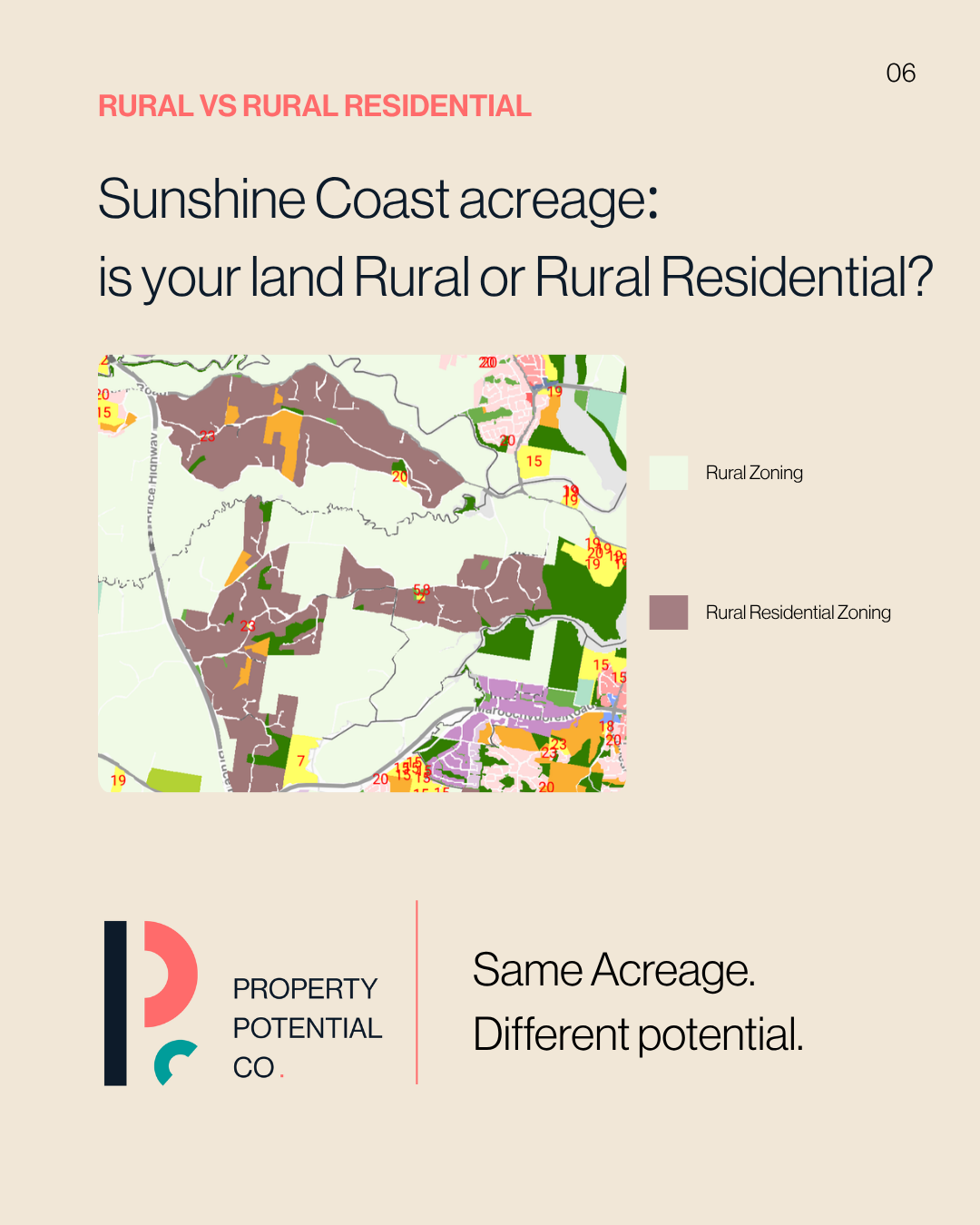
Do you own acreage and assume the size of your land is what matters most?
It matters, but it's rarely the whole picture.
Two "acreage" properties can be very different
Two properties can both look like acreage. They might sit near each other, have similar-sized paddocks and even similar homes. Yet their planning considerations can be quite different, depending on whether the land is zoned Rural or Rural Residential.
For many owners, this comes as a surprise. On the ground the properties feel the same. In the planning scheme, they're treated as different things.
What Rural and Rural Residential zoning generally mean
Zoning is one of the first things that shapes what may be possible on your property. In broad terms:
Rural zoning is often intended to support agricultural, environmental or broader rural land uses.
Rural Residential zoning is generally more closely associated with lifestyle acreage living.
These are general descriptions only. The detail for your property sits in the Sunshine Coast Planning Scheme (or the scheme for your local council area), and it can vary between areas.
Neither label tells you the whole story
Here's the important part. Knowing your zone is a good starting point, but neither label automatically tells you whether you can:
Add a dwelling
Create space for older parents
Plan for adult children
Subdivide
Sell part of the land
Reshape the property for the future
The zone sets the broad framework. Whether a particular idea is realistic depends on the specifics of your property.
What else can influence what's possible
Several other factors work alongside zoning.
The planning scheme
Your local planning scheme sets out the specific requirements that apply, including how additional dwellings and subdivision are treated. Different zones carry different provisions, and the terminology can matter, such as the difference between a secondary dwelling and dual occupancy.
Minimum lot sizes
Minimum lot sizes are a common reason a large block can't be divided as easily as owners expect. The requirement depends on the zone and the planning scheme, so two blocks with the same area can lead to different outcomes.
Overlays
Flood, bushfire, vegetation and slope overlays can affect where something could sensibly be located, how it might need to be designed, and how much of the land is practical to use.
Access and frontage
Legal, practical access and road frontage are often decisive, especially for subdivision. The way the block is laid out can matter as much as its size.
Site conditions and existing development
Slope, watercourses, vegetation and services shape what's practical on the ground. The position of the house, sheds and driveways can also influence what else could fit.
The question worth asking
The important question isn't simply, "How many acres do I have?"
It's:
"What planning rules apply to this particular property, and what questions should I be asking before making a significant decision?"
Starting with that question can help you avoid spending time and money on ideas that don't stack up. It can also help you spot options you hadn't thought of.
Why understanding the distinction is a worthwhile starting point
If you're considering any of the following, understanding how your zoning and planning framework apply to your property is a sensible first step:
A second dwelling, sometimes called a secondary dwelling or granny flat
Multigenerational living
Downsizing while staying on the land
Adding value to the property
Planning for your children's future
You don't need to be ready to build, subdivide or sell. Sometimes the most useful thing is simply knowing where you stand.
Take the first step
At Property Potential Co, we combine town planning knowledge with real estate insight to help you understand what your zoning and planning framework could mean for your property. There's no pressure and no obligation.
Not sure what applies to your property? Start with a Free Property Potential Check. It's a simple first look from a qualified Town Planner and licensed Real Estate Agent.
This article is general information only and isn't a guarantee of any planning, approval or financial outcome. Every property is different, and any additional dwelling or subdivision is subject to Council requirements and approvals.